Because of those long-term patterns, as well as the recent period of economic recovery, cities in some parts of the country have lost tens of thousands of residents.
To find the 50 U.S. metropolitan areas that have had the largest net decline in population as a result of migration between 2010 and 2017, 24/7 Wall Street reviewed population figures from the U.S. Census Bureau��s Population Estimates Program.
The 50 cities where the most people are moving away from can primarily be found in the Northeast, Midwest, and West Coast, particularly in states like Illinois, Michigan, Ohio, and New York. Among the cities where people are leaving in droves are places such as Chicago, Detroit, St. Louis, New York, and Los Angeles.
More:Population migration patterns: US cities Americans are flocking to
More:Gas prices: Don't fill up in these states on your roadtrip
More:Salaries: US wage growth in June was 2018's strongest so far
William Frey, demographer at the Brookings Institution, a nonprofit public policy research group, explained that these cities that have been losing thousands of residents due to migration are part of the long-term trend of movement from the Northeast and the Midwest to warmer climates, a trend that has increased in recent years.
��The story of the broader migration pattern in the U.S. is from Snow Belt to Sun Belt," Frey said. "That migration has slowed a little bit in the early part of the decade, when we were still dealing with the aftermath of the recession, but it's coming back.��
More:Are these the worst cities to live in? Study looks at quality of life across the U.S.

(Photo: Thinkstock)
50. Fairbanks, Alaska
Population decrease due to migration, 2010-2017: -7,011Population change, 2010-2017: +2.2% (97,585 to 99,703)Natural growth, 2010-2017: 12,364 births, 3,417 deathsMedian home value: $226,90049. Johnstown, Pennsylvania
Population decrease due to migration, 2010-2017: -7,070Population change, 2010-2017: -7.4% (143,674 to 133,054)Natural growth, 2010-2017: 9,624 births, 13,203 deathsMedian home value: $93,40048. Hinesville, Georgia
Population decrease due to migration, 2010-2017: -7,171Population change, 2010-2017: +3.2% (77,919 to 80,400)Natural growth, 2010-2017: 12,218 births, 3,030 deathsMedian home value: $133,60047. El Centro, California
Population decrease due to migration, 2010-2017: -7,219Population change, 2010-2017: +4.8% (174,528 to 182,830)Natural growth, 2010-2017: 22,531 births, 7,106 deathsMedian home value: $170,900More:Who is getting paid more? 16 states where personal incomes are booming
46. Bakersfield, California
Population decrease due to migration, 2010-2017: -7,314Population change, 2010-2017: +6.4% (839,621 to 893,119)Natural growth, 2010-2017: 102,106 births, 41,099 deathsMedian home value: $204,20045. Norwich-New London, Connecticut
Population decrease due to migration, 2010-2017: -7,365Population change, 2010-2017: -1.8% (274,059 to 269,033)Natural growth, 2010-2017: 19,518 births, 17,252 deathsMedian home value: $242,000
44. Fresno, CA • Population decrease due to migration, 2010-2017: -7,571 • Population change, 2010-2017: +6.3% (930,495 to 989,255) • Natural growth, 2010-2017: 113,926 births, 47,252 deaths • Median home value: $238,100 (Photo: Qymekkam / Wikimedia Commons)
44. Fresno, California
Population decrease due to migration, 2010-2017: -7,571Population change, 2010-2017: +6.3% (930,495 to 989,255)Natural growth, 2010-2017: 113,926 births, 47,252 deathsMedian home value: $238,10043. Macon-Bibb County, Georgia
Population decrease due to migration, 2010-2017: -7,877Population change, 2010-2017: -1.5% (232,286 to 228,914)Natural growth, 2010-2017: 21,752 births, 17,233 deathsMedian home value: $122,00042. Anchorage, Alaska
Population decrease due to migration, 2010-2017: -8,464Population change, 2010-2017: +5.3% (380,821 to 400,888)Natural growth, 2010-2017: 43,973 births, 15,756 deathsMedian home value: $299,70041. Vineland-Bridgeton, New Jersey
Population decrease due to migration, 2010-2017: -8,476Population change, 2010-2017: -2.6% (156,628 to 152,538)Natural growth, 2010-2017: 14,926 births, 10,604 deathsMedian home value: $165,90040. Erie, Pennsylvania
Population decrease due to migration, 2010-2017: -8,511Population change, 2010-2017: -2.1% (280,564 to 274,541)Natural growth, 2010-2017: 22,920 births, 20,396 deathsMedian home value: $125,700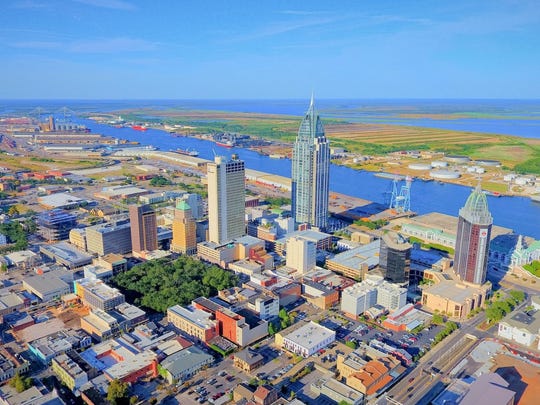
39. Mobile, AL • Population decrease due to migration, 2010-2017: -8,517 • Population change, 2010-2017: +0.2% (413,143 to 413,955) • Natural growth, 2010-2017: 40,422 births, 30,886 deaths • Median home value: $126,800 ALSO READ: States Where Americans Are Paying the Most Taxes (Photo: George Dodd / Getty Images)
39. Mobile, Alabama
Population decrease due to migration, 2010-2017: -8,517Population change, 2010-2017: +0.2% (413,143 to 413,955)Natural growth, 2010-2017: 40,422 births, 30,886 deathsMedian home value: $126,80038. Atlantic City-Hammonton, New Jersey
Population decrease due to migration, 2010-2017: -8,550Population change, 2010-2017: -1.7% (274,540 to 269,918)Natural growth, 2010-2017: 22,801 births, 18,976 deathsMedian home value: $215,10037. Fayetteville, North Carolina
Population decrease due to migration, 2010-2017: -8,741Population change, 2010-2017: +5.6% (366,322 to 386,662)Natural growth, 2010-2017: 47,548 births, 19,638 deathsMedian home value: $134,600More:Which manufacturers are bringing the most jobs back to America?
36. Jacksonville, North Carolina
Population decrease due to migration, 2010-2017: -8,791Population change, 2010-2017: +9.1% (177,799 to 193,893)Natural growth, 2010-2017: 30,768 births, 7,184 deathsMedian home value: $151,50035. Yakima, Washington
Population decrease due to migration, 2010-2017: -8,916Population change, 2010-2017: +2.9% (243,237 to 250,193)Natural growth, 2010-2017: 29,681 births, 13,811 deathsMedian home value: $166,300
34. Binghamton, NY • Population decrease due to migration, 2010-2017: -9,470 • Population change, 2010-2017: -3.8% (251,737 to 242,217) • Natural growth, 2010-2017: 18,295 births, 18,409 deaths • Median home value: $121,000 (Photo: Jim Danvers / Wikimedia Commons)
34. Binghamton, New York
Population decrease due to migration, 2010-2017: -9,470Population change, 2010-2017: -3.8% (251,737 to 242,217)Natural growth, 2010-2017: 18,295 births, 18,409 deathsMedian home value: $121,00033. Sierra Vista-Douglas, Arizona
Population decrease due to migration, 2010-2017: -9,495Population change, 2010-2017: -5.0% (131,356 to 124,756)Natural growth, 2010-2017: 11,814 births, 9,110 deathsMedian home value: $130,10032. Farmington, New Mexico
Population decrease due to migration, 2010-2017: -9,633Population change, 2010-2017: -2.4% (130,045 to 126,926)Natural growth, 2010-2017: 13,381 births, 6,949 deathsMedian home value: $153,100More:What's the richest town in every state?
31. Lawton, Oklahoma
Population decrease due to migration, 2010-2017: -9,641Population change, 2010-2017: -2.3% (130,291 to 127,349)Natural growth, 2010-2017: 14,355 births, 7,848 deathsMedian home value: $124,90030. Charleston, West Virginia
Population decrease due to migration, 2010-2017: -9,772Population change, 2010-2017: -5.6% (227,061 to 214,406)Natural growth, 2010-2017: 18,078 births, 20,856 deathsMedian home value: $111,300
29. Saginaw, MI • Population decrease due to migration, 2010-2017: -9,783 • Population change, 2010-2017: -4.1% (200,169 to 191,934) • Natural growth, 2010-2017: 16,380 births, 14,912 deaths • Median home value: $96,200 ALSO READ: America's Happiest (and Most Miserable) States (Photo: User:Hsxeric / Wikimedia Commons)
29. Saginaw, Michigan
Population decrease due to migration, 2010-2017: -9,783Population change, 2010-2017: -4.1% (200,169 to 191,934)Natural growth, 2010-2017: 16,380 births, 14,912 deathsMedian home value: $96,20028. Pine Bluff, Arkansas
Population decrease due to migration, 2010-2017: -10,001Population change, 2010-2017: -9.3% (100,278 to 90,963)Natural growth, 2010-2017: 8,244 births, 7,701 deathsMedian home value: $84,70027. Montgomery, Alabama
Population decrease due to migration, 2010-2017: -10,317Population change, 2010-2017: -0.2% (374,541 to 373,903)Natural growth, 2010-2017: 35,032 births, 25,380 deathsMedian home value: $135,70026. Wichita, Kansas
Population decrease due to migration, 2010-2017: -10,335Population change, 2010-2017: +2.3% (630,924 to 645,628)Natural growth, 2010-2017: 65,873 births, 40,647 deathsMedian home value: $132,400
(Photo: https://www.flickr.com/photos/dougtone/)
25. Watertown-Fort Drum, New York
Population decrease due to migration, 2010-2017: -10,901Population change, 2010-2017: -1.8% (116,232 to 114,187)Natural growth, 2010-2017: 15,196 births, 6,527 deathsMedian home value: $149,60024. Albany, Georgia
Population decrease due to migration, 2010-2017: -10,964Population change, 2010-2017: -3.9% (157,500 to 151,434)Natural growth, 2010-2017: 15,175 births, 10,379 deathsMedian home value: $109,600More:Migration and growth: The fastest growing (and shrinking) cities in the US
23. New Haven-Milford, Connecticut
Population decrease due to migration, 2010-2017: -11,253Population change, 2010-2017: -0.2% (862,462 to 860,435)Natural growth, 2010-2017: 64,732 births, 55,491 deathsMedian home value: $247,60022. Visalia-Porterville, California
Population decrease due to migration, 2010-2017: -12,390Population change, 2010-2017: +5.0% (442,178 to 464,493)Natural growth, 2010-2017: 55,606 births, 20,845 deathsMedian home value: $186,600
21. Shreveport-Bossier City, LA • Population decrease due to migration, 2010-2017: -12,410 • Population change, 2010-2017: +0.3% (439,811 to 440,933) • Natural growth, 2010-2017: 46,192 births, 32,742 deaths • Median home value: $150,900 ALSO READ: The Weirdest Fact About Every American President (Photo: Shreveport-Bossier Convention and Tourist Bureau / Wikimedia Commons)
21. Shreveport-Bossier City, Louisiana
Population decrease due to migration, 2010-2017: -12,410Population change, 2010-2017: +0.3% (439,811 to 440,933)Natural growth, 2010-2017: 46,192 births, 32,742 deathsMedian home value: $150,90020. Hartford-West Hartford-East Hartford, Connecticut
Population decrease due to migration, 2010-2017: -13,682Population change, 2010-2017: -0.2% (1,212,398 to 1,210,259)Natural growth, 2010-2017: 86,636 births, 75,155 deathsMedian home value: $247,40019. Youngstown-Warren-Boardman, Ohio-Pennsylvania
Population decrease due to migration, 2010-2017: -14,057Population change, 2010-2017: -4.2% (565,799 to 541,926)Natural growth, 2010-2017: 40,696 births, 50,302 deathsMedian home value: $106,00018. Peoria, Illinois
Population decrease due to migration, 2010-2017: -14,415Population change, 2010-2017: -1.8% (379,186 to 372,427)Natural growth, 2010-2017: 35,268 births, 27,573 deathsMedian home value: $136,80017. Hanford-Corcoran, California
Population decrease due to migration, 2010-2017: -14,442Population change, 2010-2017: -1.9% (152,982 to 150,101)Natural growth, 2010-2017: 17,121 births, 5,895 deathsMedian home value: $190,500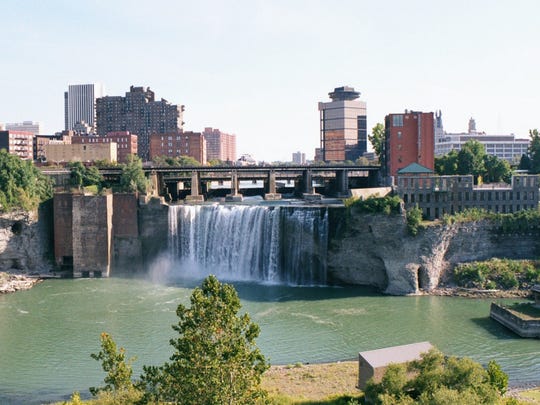
(Photo: Andreas F. Borchert / Wikimedia Commons)
16. Rochester, New York
Population decrease due to migration, 2010-2017: -15,934Population change, 2010-2017: -0.2% (1,079,691 to 1,077,948)Natural growth, 2010-2017: 84,317 births, 69,938 deathsMedian home value: $138,90015. Brownsville-Harlingen, Texas
Population decrease due to migration, 2010-2017: -17,233Population change, 2010-2017: +4.3% (406,219 to 423,725)Natural growth, 2010-2017: 53,118 births, 18,432 deathsMedian home value: $80,00014. Virginia Beach-Norfolk-Newport News, Virginia-North Carolina
Population decrease due to migration, 2010-2017: -17,297Population change, 2010-2017: +2.9% (1,676,817 to 1,725,246)Natural growth, 2010-2017: 163,787 births, 97,935 deathsMedian home value: $239,90013. Syracuse, New York
Population decrease due to migration, 2010-2017: -17,717Population change, 2010-2017: -1.2% (662,625 to 654,841)Natural growth, 2010-2017: 52,435 births, 42,535 deathsMedian home value: $133,300More:Jeep, Disney, Coca-Cola top survey list of America��s most patriotic brands
12. Toledo, Ohio
Population decrease due to migration, 2010-2017: -18,475Population change, 2010-2017: -1.0% (610,002 to 603,668)Natural growth, 2010-2017: 54,309 births, 42,313 deathsMedian home value: $129,20011. Rockford, Illinois
Population decrease due to migration, 2010-2017: -18,789Population change, 2010-2017: -3.2% (349,431 to 338,291)Natural growth, 2010-2017: 30,366 births, 22,915 deathsMedian home value: $121,60010. New York-Newark-Jersey City, New York-New Jersey-Pennsylvania
Population decrease due to migration, 2010-2017: -21,503Population change, 2010-2017: +3.9% (19,566,480 to 20,320,876)Natural growth, 2010-2017: 1,811,927 births, 1,035,505 deathsMedian home value: $426,300
9. El Paso, TX • Population decrease due to migration, 2010-2017: -21,829 • Population change, 2010-2017: +5.1% (804,123 to 844,818) • Natural growth, 2010-2017: 98,803 births, 36,570 deaths • Median home value: $119,600 ALSO READ: 50 Colleges With the Biggest Tuition Hikes (Photo: LC Rogers / Wikimedia Commons)
9. El Paso, Texas
Population decrease due to migration, 2010-2017: -21,829Population change, 2010-2017: +5.1% (804,123 to 844,818)Natural growth, 2010-2017: 98,803 births, 36,570 deathsMedian home value: $119,6008. Flint, Michigan
Population decrease due to migration, 2010-2017: -22,658Population change, 2010-2017: -4.3% (425,788 to 407,385)Natural growth, 2010-2017: 35,720 births, 31,707 deathsMedian home value: $106,9007. Milwaukee-Waukesha-West Allis, Wisconsin
Population decrease due to migration, 2010-2017: -27,959Population change, 2010-2017: +1.3% (1,555,954 to 1,576,236)Natural growth, 2010-2017: 144,429 births, 95,601 deathMedian home value: $204,0006. Memphis, Tennessee-Mississippi-Arkansas
Population decrease due to migration, 2010-2017: -30,000Population change, 2010-2017: +1.8% (1,324,827 to 1,348,260)Natural growth, 2010-2017: 136,058 births, 82,670 deathsMedian home value: $142,400
(Photo: styxclick / Getty Images)
5. Cleveland-Elyria, Ohio
Population decrease due to migration, 2010-2017: -33,117Population change, 2010-2017: -0.9% (2,077,271 to 2,058,844)Natural growth, 2010-2017: 168,361 births, 153,138 deathsMedian home value: $146,1004. St. Louis, Missouri-Illinois
Population decrease due to migration, 2010-2017: -39,894Population change, 2010-2017: +0.7% (2,787,763 to 2,807,338)Natural growth, 2010-2017: 246,280 births, 186,111 deathsMedian home value: $169,2003. Detroit-Warren-Dearborn, Michigan
Population decrease due to migration, 2010-2017: -54,640Population change, 2010-2017: +0.4% (4,296,317 to 4,313,002)Natural growth, 2010-2017: 364,121 births, 293,091 deathsMedian home value: $160,7002. Los Angeles-Long Beach-Anaheim, California
Population decrease due to migration, 2010-2017: -93,959Population change, 2010-2017: +4.1% (12,828,961 to 13,353,907)Natural growth, 2010-2017: 1,202,115 births, 578,750 deathsMedian home value: $578,200
(Photo: Thinkstock)
1. Chicago-Naperville-Elgin, Illinois-Indiana-Wisconsin
Population decrease due to migration, 2010-2017: -296,320Population change, 2010-2017: +0.8% (9,461,541 to 9,533,040)Natural growth, 2010-2017: 869,178 births, 501,469 deathsMedian home value: $229,900More:25 richest cities in America: Does your metro area make the list?
Detailed findingsNot all the cities with the largest net declines in population from migration since 2010 are necessarily the fastest shrinking cities. However, among the U.S. metropolitan areas with the highest net population declines due to migration, the vast majority have had the largest overall decreases in population.
Two notable exceptions are New York and Los Angeles. While tens of thousands more people moved out of each city than moved in, both cities have still had among the highest net increases in population. This is because of natural population growth -- hundreds of thousands more people in these cities have been born than died. Notably, Los Angeles had a net migration loss of 93,959, but the overall population increased by over three-quarters of a million people because of births.
Frey explained that movement from New York and Los Angeles to many of the cities with the largest net migration increases is due to residents of these cities getting pushed out because of rising populations and prices, the latter of which is a product of the economic recovery. "Now that things are picking up again, people are moving out of cities. As the housing market is coming back, people are being sucked out of pricey areas to where it is more affordable again.��
Frey gave the example of one common migration pattern: Los Angeles to Las Vegas, the latter of which had the 15th highest net population increase due to migration. Los Angeles has always lost residents to Las Vegas, but when the recession hit and housing prices fell, that movement slowed significantly.
Now that housing prices have recovered in Los Angeles and have become too expensive for many residents, people are once again moving out of the city in droves. As of 2016, Los Angeles had the seventh highest median home value of any metropolitan area, at $578,200. Las Vegas�� median home value is just slightly more than half that, at $233,700.
More:Cost of living: The purchasing power of a dollar in every state
��The same sort of thing is true for a place like New York,�� Frey added. ��There has always been huge movement going from New York to Florida, but during the Great Recession period that slowed up quite a bit, and now it is picking up again.��
Frey added that the reasons behind the decline in population in cities like Los Angeles and New York -- overcrowding and high prices -- are very different than the reasons for decreases in other cities on this list, notably Rust Belt cities like Flint, Michigan; Toledo, Ohio; and Rockford, Illinois; and even larger cities like St. Louis, Cleveland, and Milwaukee. These cities have been losing domestic migrants for decades due to stagnating economic conditions stemming from the decline of American manufacturing.
Methodology
To identify America��s Fastest Declining Cities, 24/7 Wall Street�reviewed the annual estimates of resident population and the estimates of the components of residential population change from April 1, 2010 to July 1, 2017, provided by the American Community Survey. Population, and home value data also came from the 2016 American Community Survey.
24/7 Wall Street is a USA TODAY content partner offering financial news and commentary. Its content is produced independently of USA TODAY.

No comments:
Post a Comment